Description
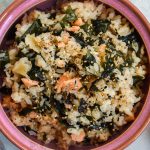
This Japanese Smoked Salmon Rice is light, savoury but satisfying, and is a great way of having a little bit of salmon for dinner (making it a bit more affordable) than cooking a whole fillet.
Ingredients
Scale
- 150g white sushi rice
- 1/2 cm piece fresh ginger
- 1/2 tbsp toasted white sesame seeds
- 1 tsp soy sauce (see note)
- 1 tsp mirin
- 1 tsp cooking sake
- 1/4 tsp instant dashi powder
- generous pinch of flaky sea salt
- dash of toasted sesame oil
- 1 tbsp dried wakame seaweed
- 40g smoked salmon, roughly chopped
- furikake, to serve
Instructions
- Rinse the rice in a sieve under the cold tap until the water running through it runs clear. Transfer to a medium bowl, cover with cold water and leave to stand for 20 minutes.
- Meanwhile, prepare the rest of the ingredients. Peel and finely slice the ginger, and add it to a medium, lidded, heavy bottomed saucepan along with the sesame seeds, soy sauce, mirin, sake, dashi powder, a pinch of salt, a dash of toasted sesame oil, and 195ml cold water.
- Drain the soaked rice and stir it into the pan. Sprinkle the seaweed and salmon pieces on top, and place over a high heat.
- Once the liquid has started to boil, add the lid and turn the heat down as low as it will go. Cook for 15 minutes, undisturbed. Then remove the lid, give the rice a gentle stir (making sure to lift any pieces that may have become stuck at the bottom), then return the lid, leaving the rice to rest for 10 minutes.
- Serve the rice with furikake sprinkled over each portion.
Notes
While any standard soy sauce will work in this recipe, I’ve found Japanese-style all purpose soy sauce (I buy Kikkoman brand, the one with the red top) or tamari give the best results.