I love creating recipes, restaurant reviews and travel guides, but to keep this site going I sometimes feature sponsored posts (which are all clearly marked) and I also use cookies and affiliate links (so if I link to a product I love, and you click my link and buy it, I make a bit of money!) In recent posts these are all clearly marked with *. Please note archive posts are still being updated. Additionally, I use Google Analytics to collect some (anonymised!) data about your visit. You can find out more by reading my Privacy Policy.
By hitting okay and proceeding to my site, you are agreeing to your data being used in this way.
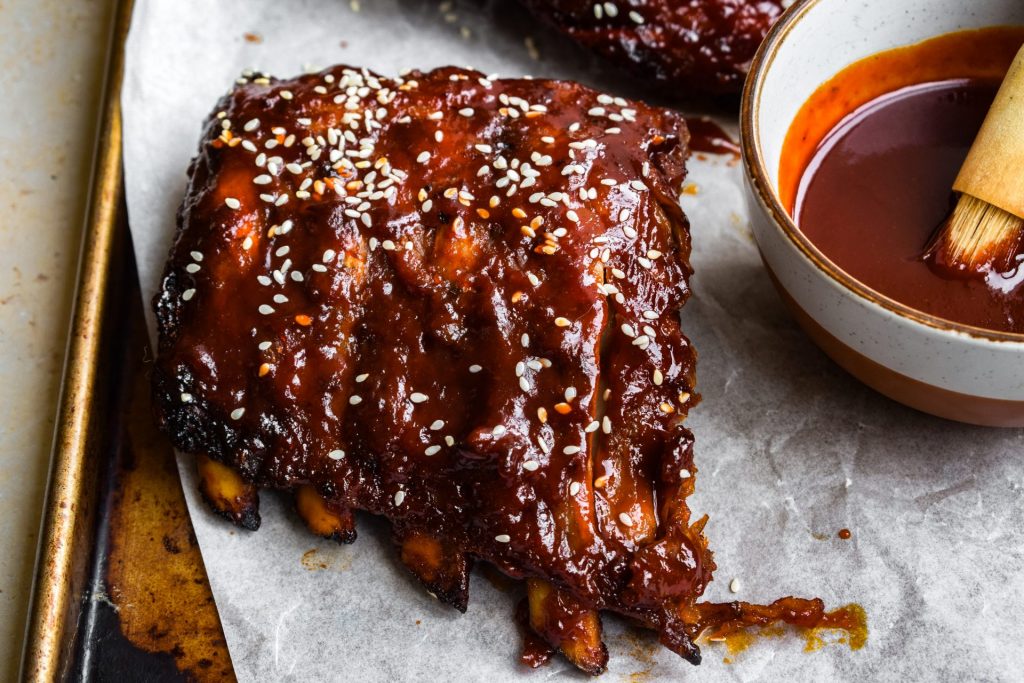
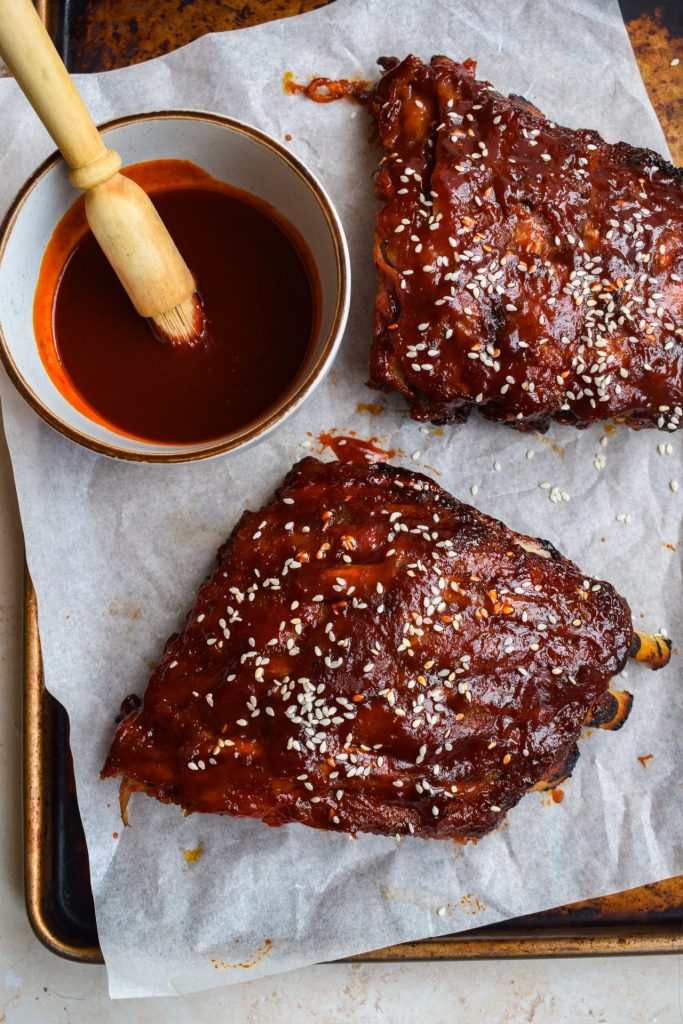
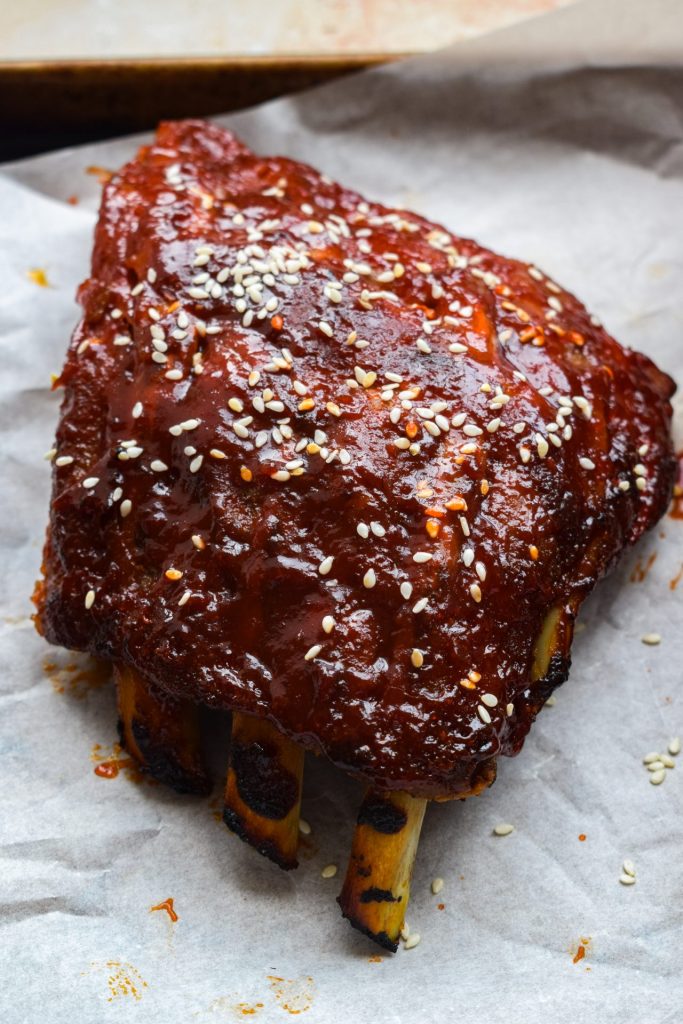
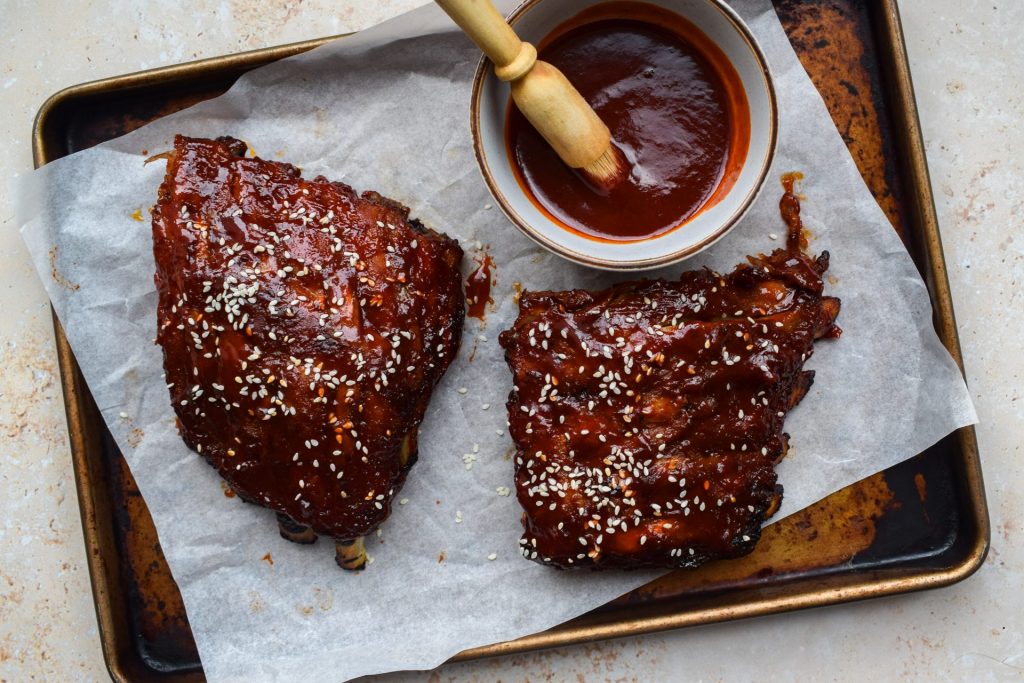
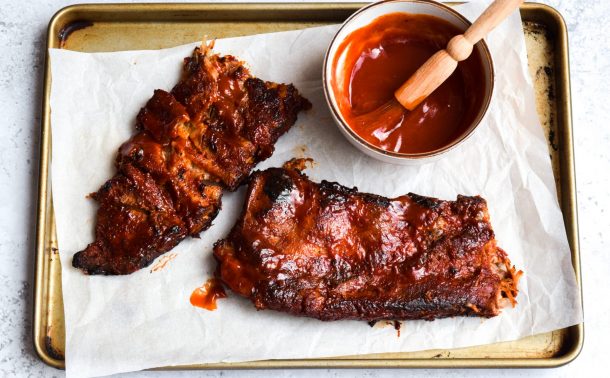
Ever since I perfected barbecue ribs a couple of years ago – slow cooked in the oven smothered in a homemade dry rub and finished either under the grill or on the barbecue with a homemade barbecue sauce – I’ve been thinking about making gochujang ribs, a take on them with a slightly Korean inflection from my favourite chilli sauce. The result is slightly sweet but still savoury, sticky and slightly spicy, but still with fall-apart pork that is perfectly tender so that the rib bones just slide out when you come to eat them.
I always knew this would work because I have a confession to make about the original ribs; I don’t always make both the homemade dry rub, or the sauce – I just use whatever rub I’ve got open or sauce that’s in the fridge door. Ribs are something I sometimes make when I know we’ll need a last minute meal; I can do the slow cooking ahead and just heat them up with the sauce while chips are cooking in the air fryer, and either some corn is boiling or I’m slicing some avocado. The same works very well for this recipe too, both the making ahead and element replacement strategy; the rib cooking technique works with any Korean barbecue inspired rub, or Korean-influenced barbecue sauce. However, that being said this 100% homemade version really is the best version.
Korean Chilli Products
This recipe calls for both gochujang (Korean chilli paste) in the sauce and gochugaru (Korean chilli flakes) in the rub, so it is worth a visit to an Asian supermarket for them, or a quick order to Sous Chef who stock good versions of both. Always buy imported gochujang in a (usually red and yellow/ gold) tub; it should be super thick and dark red. Sainsbury’s sell this version, but avoid supermarket own-brand versions that are looser and never quite taste right. Sadly, I’ve never seen gochugaru in a supermarket, but if you don’t want to go somewhere specialist Aleppo chilli flakes would make a decent substitution if you happen to have them to hand (yes, I’m aware you can’t get those in a supermarket either but I don’t know what you do or don’t already have!)
Frequently Asked Question
Should I remove the membrane from the ribs?
The membrane is a thin layer on the underside of the ribs, and technically speaking, you should remove it making ribs. However, when I’m slow cooking them like this I rarely bother as I never notice it. But, a thick membrane will impact the overall experience. As a good rule of thumb, if it is thick enough to easily pull away, take it off, but if you’re struggling to get purchase on it or even find it, don’t worry about it! If you get your ribs from the butcher you can always ask them to do it for you.
What should I serve with these ribs? Do they work with Asian or barbecue-style sides?
Honestly, they work with both, as they taste both a little bit Korean and a little bit American. I’ve served with with corn, sliced avocado, slaw and fries before, and with coconut rice and my sesame avocado salad. Kimchi would also be delicious on the side!
Can I scale this recipe up to serve more people?
Yes! Simply double or triple the sauce, and wrap more ribs in their own individual foil packets. I’ve written one rack of ribs to serve 2 as half is enough for me, but I think without plenty of sides J would want a whole one to himself so keep this in mind when serving hungry people!
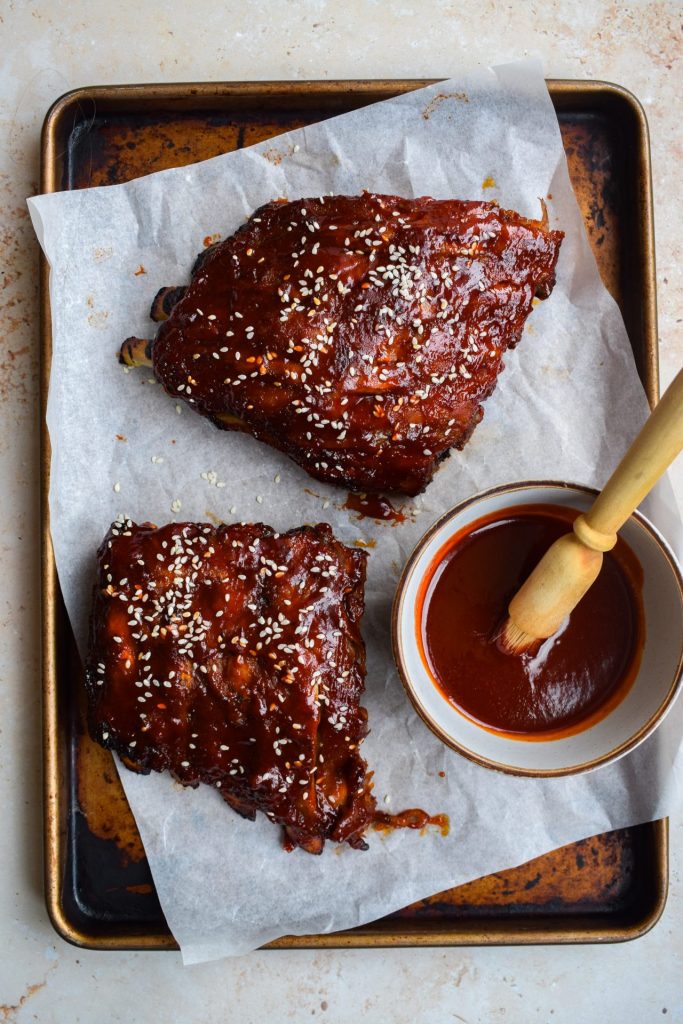
These easy, slow cooked pork ribs are started with a Korean-inspired homemade dry rub, and finished with a thick, sticky homemade gochujang barbecue sauce, either under the grill or on the barbecue!
Ingredients
Scale
For the Ribs
2 tbsp soft brown sugar
1/2 tbsp flaky sea salt
1/2 tbsp gochugaru Korean chilli flakes
1/2 tsp garlic powder
1/2 tsp onion powder
1 x rack pork ribs
toasted sesame seeds, optional to serve
For the Gochujang Barbecue Sauce
2 tbsp gochujang
2 tbsp maple syrup
1 tbsp tomato ketchup
1/2 tbsp toasted sesame oil
1/2 tbsp rice wine vinegar
1 tsp Dijon mustard
1 tsp flaky sea salt
Instructions
Pre-heat the oven to 135C. Combine the dry rub ingredients for the pork ribs, and set aside.
Lay the ribs out in the middle of a double layer of foil, and remove the membrane if desired.
Rub the ribs all over with the dry rub, pouring any leftover in the bowl on top of the ribs. Wrap them up in a tight package, and place in a baking dish to catch any accidental leakage. Slow cook for 3 hours.
Meanwhile, whisk together all the gochujang sauce ingredients until smooth, and set aside.
Once the foil is cool enough to touch, unwrap the ribs and transfer them to either a foil lined baking sheet (to finish them under the grill) or a large plate or chopping board.
Brush both sides of the ribs generously with sauce, and either grill on medium on each side until the sauce is bubbling and slightly caramelised in patches, or do the same finishing them on the barbecue – but be careful, this sauce burns really easily which is why I usually use the oven method!
Serve broken into two half racks (this will probably have already happened handling the slow cooked meat!) and serve sprinkled with sesame seeds, and with any leftover sauce on the side.
Notes
These ribs can be slow cooked and refrigerated in their foil for up to 3 days before being finished with their sauce.
I'm a food writer, professional recipe developer and cookbook author living in the English Countryside. I love creating easy, accessable recipes filled with vibrant world flavours that are manageable on busy weeknights. Simple and delicious dinners, from my kitchen to yours!
One Pan Pescatarian: 100 Delicious Dinners – Veggie, Vegan, Fish
My second cookbook contains 100 delicious dinner recipes, all of which are either vegetarian, vegan or which celebrate fish and seafood - all cooked in either one pot or one pan.*



Discussion