I love creating recipes, restaurant reviews and travel guides, but to keep this site going I sometimes feature sponsored posts (which are all clearly marked) and I also use cookies and affiliate links (so if I link to a product I love, and you click my link and buy it, I make a bit of money!) In recent posts these are all clearly marked with *. Please note archive posts are still being updated. Additionally, I use Google Analytics to collect some (anonymised!) data about your visit. You can find out more by reading my Privacy Policy.
By hitting okay and proceeding to my site, you are agreeing to your data being used in this way.
As summer is the time for small nibbly bits, I though today I’d introduce you to my homemade version of one of my favourite cold things from a jar to serve as part of a summer spread of such: slightly sweet, slightly sour pickled herring rollmops. Whilst I’m not standing here telling you homemade will mean I’ll never buy jarred again (homemade rollmops are a bit of a project, even if I mean that in sense of the time they take not the effort as they’re surprisingly simple!) but when I have a moment I love how easy it is to make up some of my own pickled herring where I can exactly control the flavours I’m adding.
What Are Herring Rollmops?
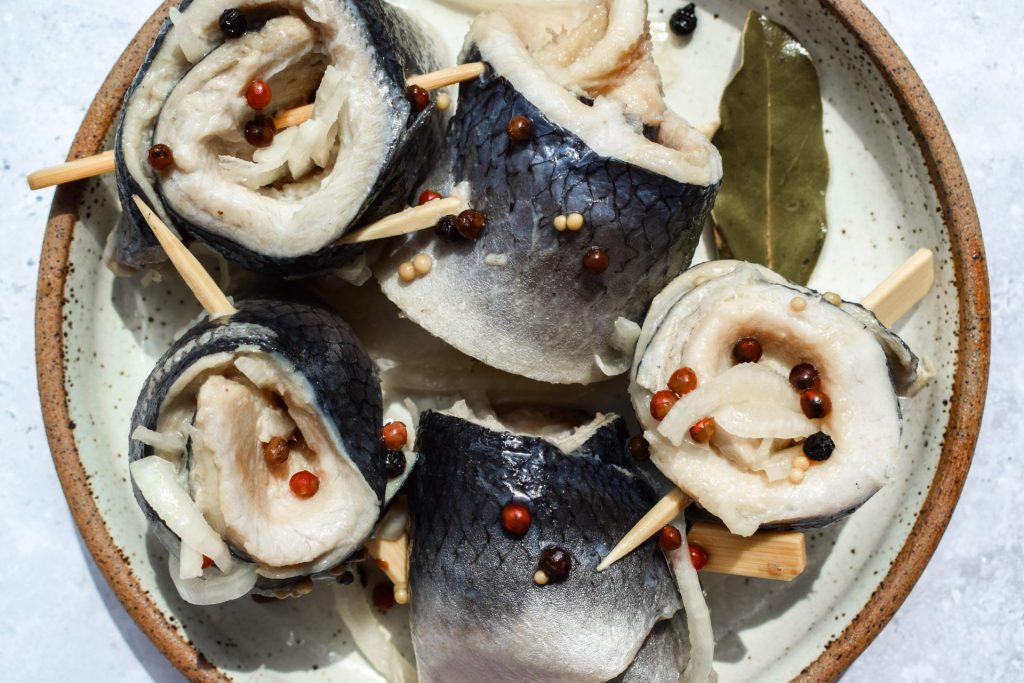
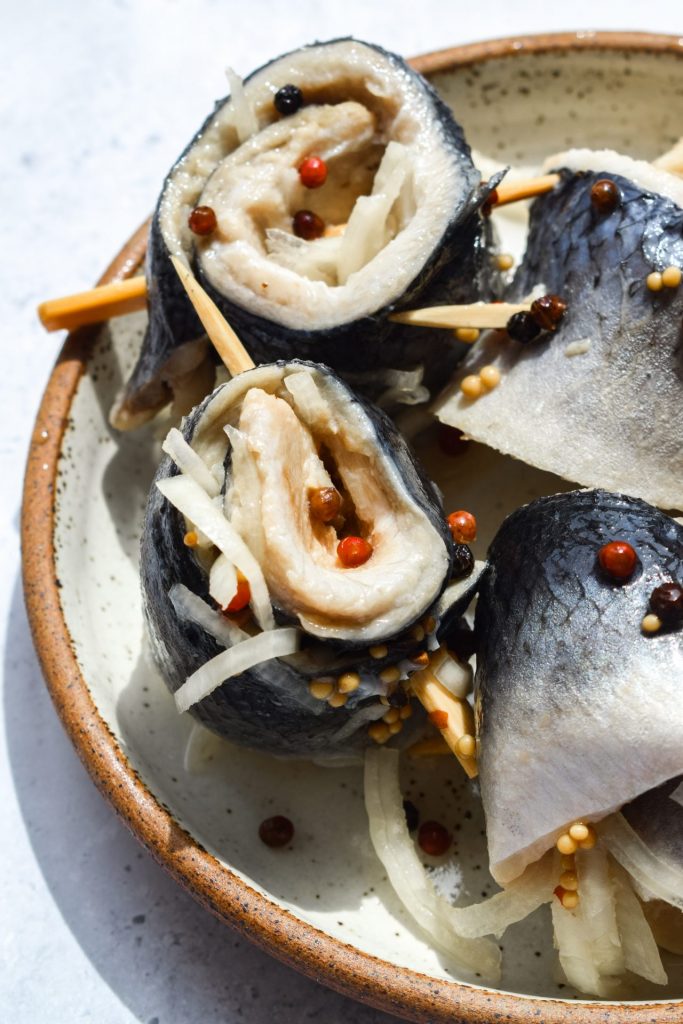
Put simply, rollmops are a Scandi-Jewish preparation of herring fillets, first cured in a sea salt brine, rolled up with onions and aromatics and secured with a toothpick before being pickled in a vinegar-salt-sugar mixture for a couple of days with your choice of herbs and spices. The result are firm yet tender rolls of pickled fish perfect for serving with crisp breads and sour cream for a quick lunch, as part of a Scandinavian-inspired breakfast spread (pickled herring was available every morning for breakfast in our hotel in Norway earlier this year), as part of a festive seafood platter, alongside cooled boiled potatoes for a no-cook meal, in potato salads, or even as a nibble with drinks.
Choosing Your Herring
The first time I made rollmops (following a recipe in Rick Stein’s Long Weekendsad, the fingerprints of which you might recognise in my own recipe) I bought fresh herring stupidly cheaply from a fisherman on the seafront in Deal, but I had to fillet, clean and bone them myself before getting started, and my resulting rollmops were a bit scraggily (though they still tasted great!) as it is not a skill I use often. For ease buy already filleted and boned fillets if you can, or ask your fishmonger to do this for you. If you don’t have a good fishmonger nearby or herring is not in season (in the UK we’re looking from about June to about February, but here in Kent they won’t become plentiful until autumn) Rockfish sell frozen herring fillets when the catch has landed, you’ll just need to de-bone them with a pair of tweezers.
Choosing Your Vinegar
I’ve used apple cider which I find adds the perfect sweet and sour flavour, as well as a little red wine vinegar to boost and add another layer to the sweetness (recipes for rollmops made without fresh dill tend to lean on the sweeter side!) but I specially bought Aspall’s Apple Cyder Vinegar which is clear and shelf stable rather than use the live Willy’s ACV with mother I keep in the fridge both for a sharper flavour and cleaner finish.
Frequently Asked Questions
Do I need to keep the skins on the herring?
Removing them is hell, but I don’t see why you’d want to remove them? The curing and pickling process makes them super tender, there are no hard scales to bite through, and they help make the rollmops look pretty too!
Can I use this recipe to make pickled / marinated herring instead of rollmops?
Yes – just skip the rolling stage, cut the herring into more manageable pieces on the diagonal, and layer them with the onions in the jar.
When I buy rollmops they don’t look as fat as yours do in the picture?
The fillets I ordered for these were some of the thickest I’ve ever come across and to be honest, they were a bit of a nightmare to roll up. If I’d not wanted to show you how to make rollmops I would have diverted into pickled herring pieces as I’ve described above. But, I got them rolled so rest assured it is possible however thick your fillets are!
How long will these pickled herring keep for?
You should aim to eat them within 10 days, always keeping the jar sealed and the herring fully submerged. After this they start to come a little soft. Realistically, I usually keep them for about two weeks, but if they taste a little unusual at first bite, stop eating! The bottom line is this is a historic preserving technique which has come into contact with modern food safety standards; use your common sense!
What jar is best for making rollmops?
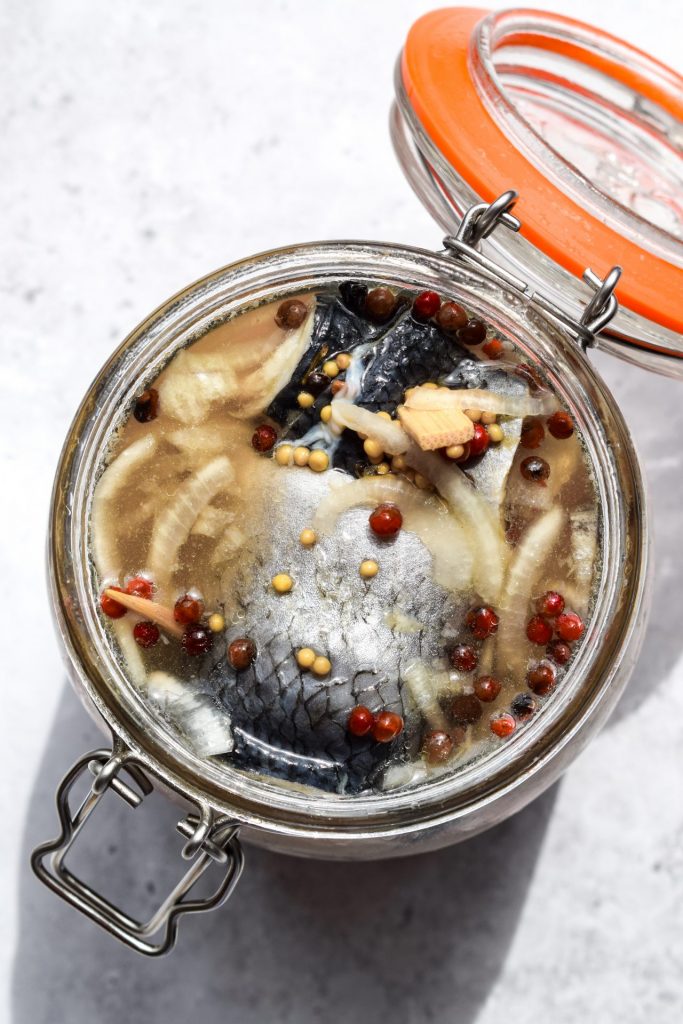
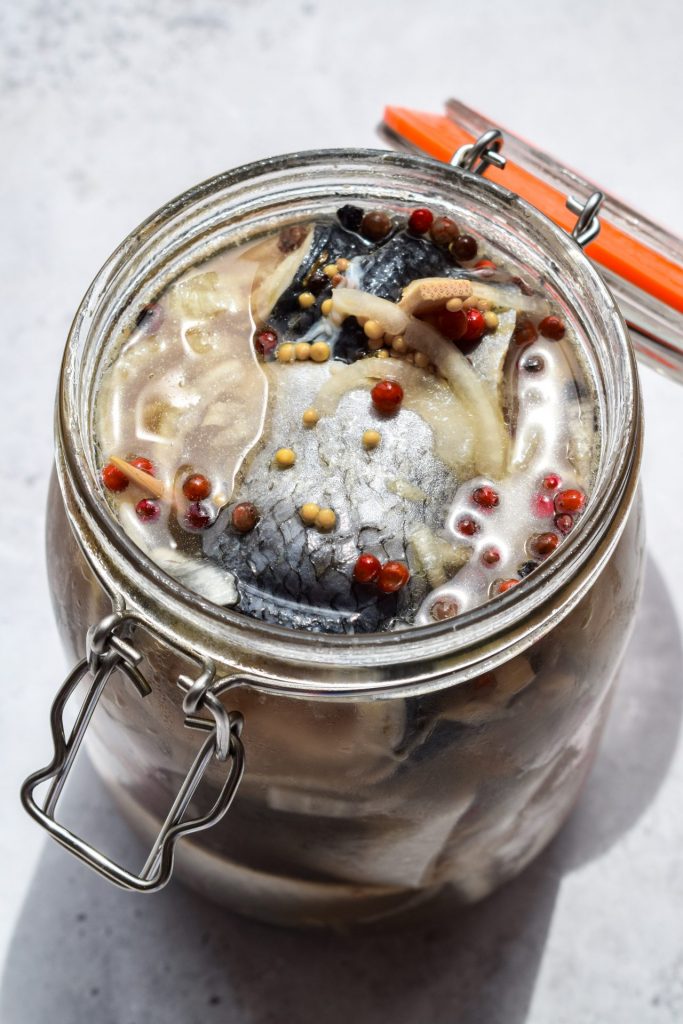
For the amount listed in the recipe below I find a 1L Kilner Jar like this onead is perfect for making sure the herring always stays below the level of the liquid – and for leaning and reusing afterwards!
These easy-to-make pickled herring rollmops are brined in a salt solution before being preserved with onions, apple cider vinegar and whole spices to make a sweet and sour Scandi-Jewish treat perfect for seafood platters, light lunches and as a luxe snack to serve with drinks!
Ingredients
Scale
4 herring, filleted with the bones removed (to yield 8 fillets)
40g sea salt
100g white sugar
400ml apple cider vinegar
100ml red wine vinegar
1 tsp black peppercorns
1 tsp red peppercorns
1 tsp yellow mustard seeds
1 dried bay leaf
1 small brown onion, finely sliced
Instructions
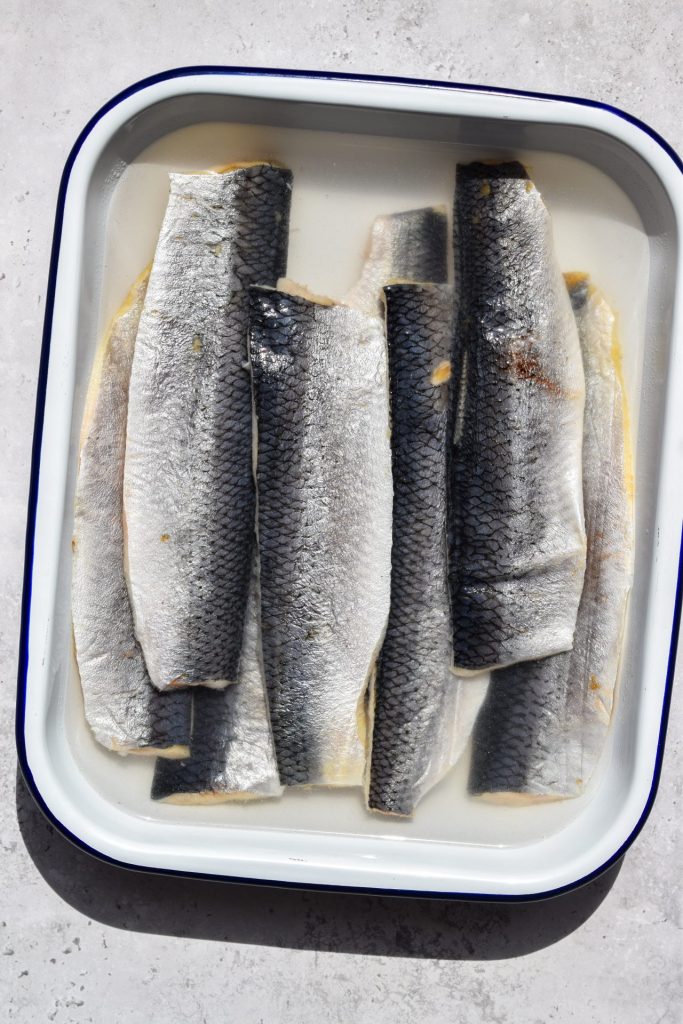
Trim any fins on the herring fillets with a sharp pair of scissors, and with a pair of tweezers remove any large bones the fishmonger might have missed. Transfer them to a dish where they can sit happily in 1-2 layers.
Stir the 40g sea salt into 400ml of cold water until the salt has completely dissolved. I find flaky sea salt dissolves best here. Pour over the fillets and leave to brine for 2-3 hours.
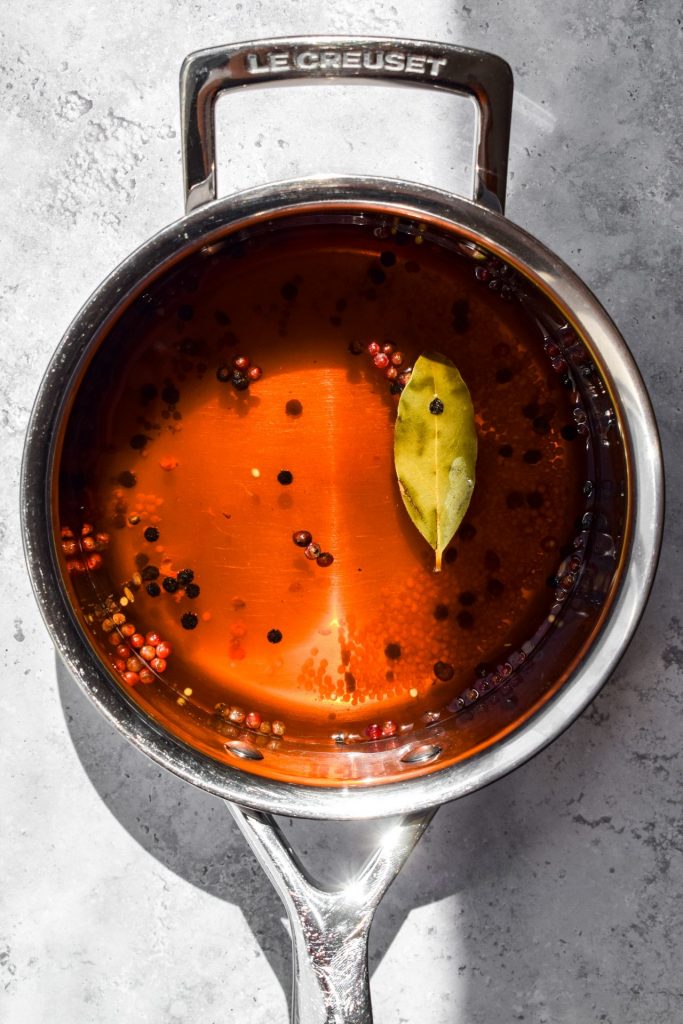
Meanwhile, combine the sugar, vinegars, whole spices and bay leaf in a small saucepan. Set over a medium-high heat, and bring to the boil, stirring until the sugar has dissolved. Cook for a further 1-2 minutes before removing from the heat to allow the spices to infuse while to cools.
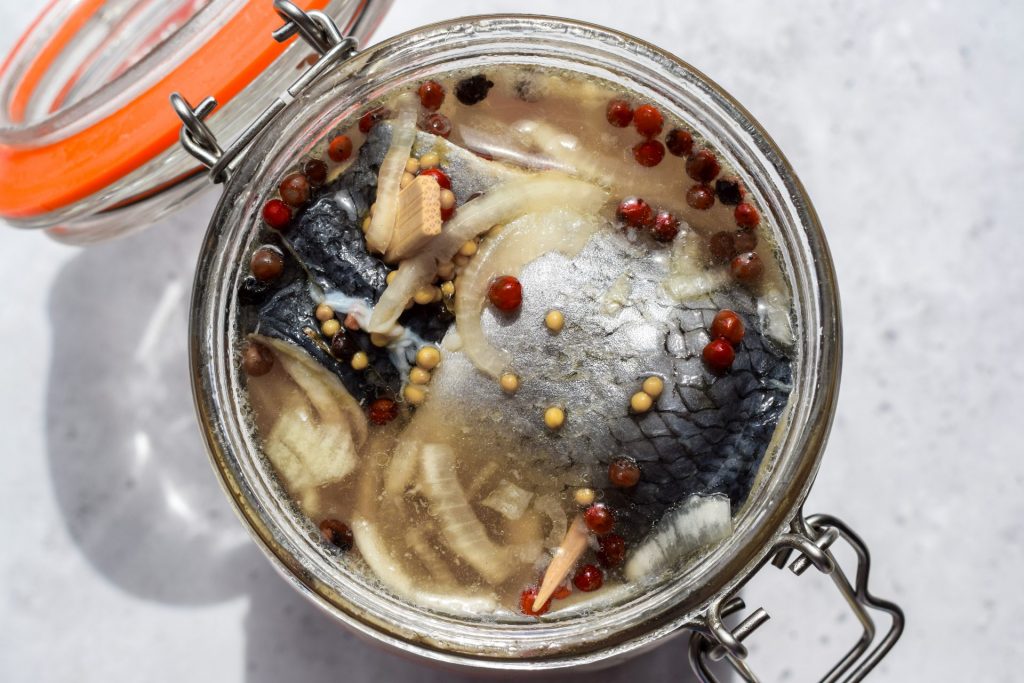
Rinse the herring under the cold tap, and pat them dry on a piece of kitchen paper. With the skin side down, roll them into rolls packing as much of the sliced onion as you can into the spirals. Secure with a toothpick, and transfer them to a 1L clip top jar, layering with some of the onion also as you go.
Pour over the pickling mixture. You might not need it all, but try to pack as many of the whole spices as you can into the jar.
Refrigerate for at least 3 days before eating!
Notes
You should aim to eat these rollmops within 10 days, always keeping the jar sealed and the herring fully submerged. After this they start to come a little soft. Realistically, I usually keep them for about two weeks, but if they taste a little unusual at first bite, stop eating! The bottom line is this is a historic preserving technique which has come into contact with modern food safety standards; use your common sense!
I'm a food writer, professional recipe developer and cookbook author living in the English Countryside. I love creating easy, accessable recipes filled with vibrant world flavours that are manageable on busy weeknights. Simple and delicious dinners, from my kitchen to yours!
One Pan Pescatarian: 100 Delicious Dinners – Veggie, Vegan, Fish
My second cookbook contains 100 delicious dinner recipes, all of which are either vegetarian, vegan or which celebrate fish and seafood - all cooked in either one pot or one pan.*




Discussion